By: Money Navigator Research Team
Last Reviewed: 07/02/2026

 FACT CHECKED
Quick Summary
Tide’s verification requests usually sit in three buckets:
- Proof of identit
- Proof of address
- Proof of business activity / eligibility (where relevant)
In 2026, many limited companies will also encounter a related but separate requirement: Companies House identity verification for directors and PSCs (People with Significant Control), which can appear during the same “getting set up” period.
Most delays come from evidence that is expired, too old, does not match the application details, or is submitted in a format that cannot be validated (for example, partial images or low-quality scans).
This article is educational and not financial advice.
What Tide is trying to confirm (and why)
When a provider asks for “verification”, it is typically trying to confirm three basics:
Identity – that the applicant is a real, identifiable person.
Address – that there is a consistent, checkable address trail.
Business reality and eligibility – that the business exists as described and falls within acceptance rules.
Tide describes these as “supporting documents” that can be requested at onboarding and during routine reviews in How to provide your supporting documents.
The three evidence buckets Tide usually asks for
Proof of identity (ID)
The identity stage is about proving the applicant is the person named in the application. Tide outlines acceptable ID routes in What ID will I need to open a bank account with Tide?.
Where applications slow down is often capture quality rather than the type of ID. Tide summarises common scan issues (focus, glare, framing and older document formats) in I’m having trouble scanning my ID.
Proof of address
Address evidence is designed to create an independent trail connecting the applicant to a location, usually with “freshness” rules. Tide’s examples and timeframes sit in How to provide your supporting documents.
A frequent edge case is a mismatch between:
- The address entered in-app
- The address shown on the submitted document
- Where home address, trading address and registered office differ, the review often becomes a reconciliation exercise rather than a simple upload
Proof of business (where applicable)
Business proof varies because business reality varies: a newly incorporated company can have minimal trading history, and a sole trader can be trading without a Companies House footprint.
Tide flags business proof as trickier to verify and lists example evidence types in How to provide your supporting documents.
For the acceptance-rule side (separate from document mechanics), see Tide eligibility: business types that can and can’t apply.
2026 update: Companies House identity verification (directors and PSCs)
Companies House identity verification is legally separate from opening a business account, but it can overlap in timing for limited companies. GOV.UK explains the requirement and routes in Verifying your identity for Companies House, and Companies House describes the two routes (GOV.UK One Login or an ACSP) in Making identity verification simple, secure and trusted.
Tide states that, where someone uses its company registration journey, it can verify identity as an ACSP and store the Companies House personal code in the Tide account, as described in File your confirmation statement.
Technical Pro Tip: the “chip scan” (NFC) and where the phone goes
Many app-led identity checks now follow a three-step pattern:
- Take a document photo
- Scan the biometric chip
- Scan your face
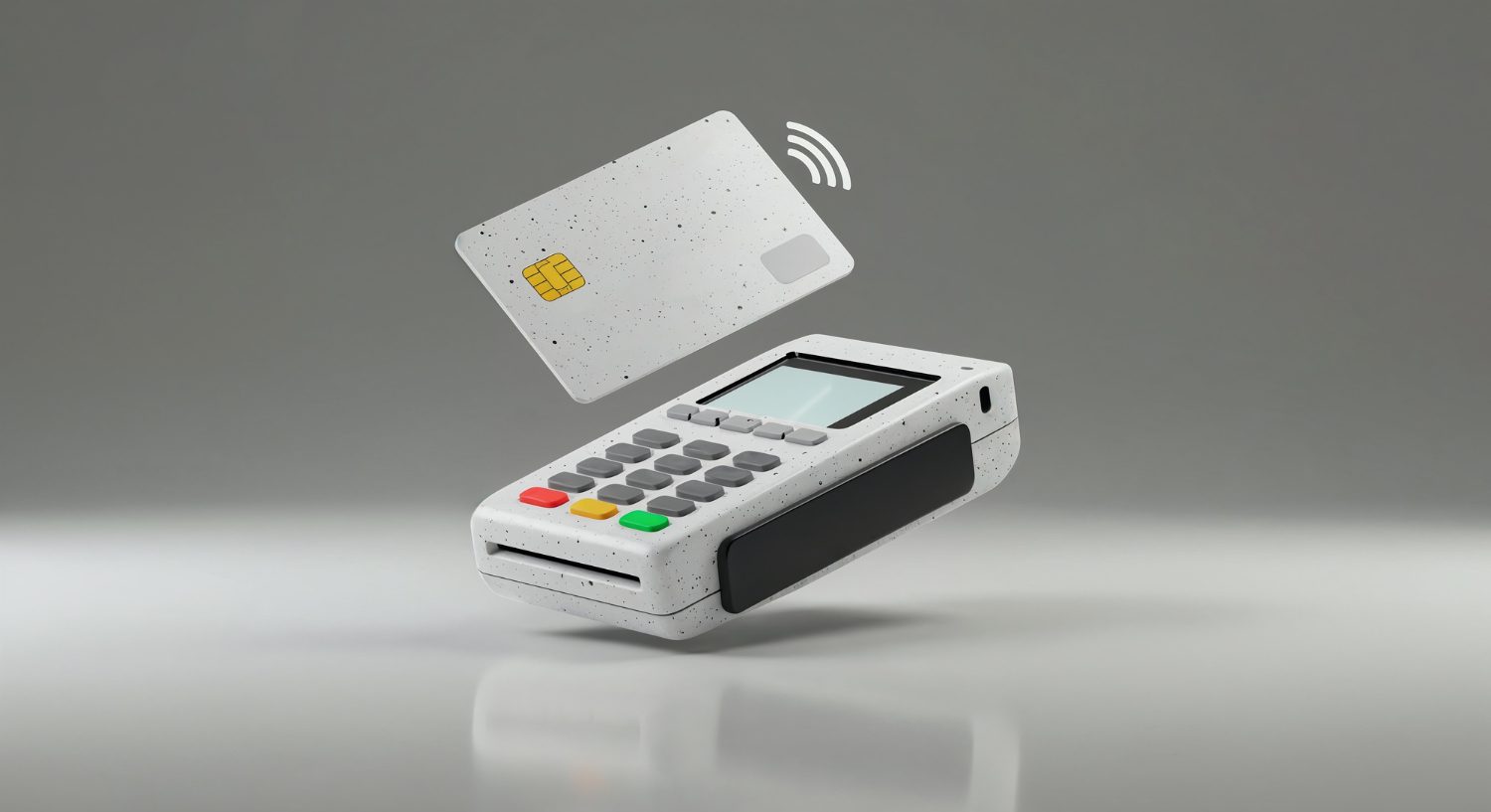
GOV.UK sets out this passport flow in Using the GOV.UK ID Check app, and notes chip scans can fail if the phone is not touching the document, if a phone case/accessory interferes, or if the phone is moved during the scan.
Here is an easy guide to watch:
This positioning is not Tide-specific – it reflects how passport chip reads typically work across UK identity-check journeys. For Tide’s capture-quality troubleshooting (glare, framing, older documents), see I’m having trouble scanning my ID.
Summary Table
| Scenario | Outcome | Practical impact |
|---|---|---|
| ID is valid (non-expired) and details match the application | Identity check can complete without rework | Faster onboarding; fewer follow-up requests |
| ID image is unclear, cropped, or shows glare | Re-submission requested | Delays while clearer images/files are provided |
| Address evidence meets the timeframe and shows the right name and address | Address check can complete | Reduced risk of “can’t verify address” loops |
| Address evidence is too old or mismatched | Additional evidence requested | Application may pause until suitable proof is provided |
| Business evidence supports the declared activity | Business/eligibility check is easier to complete | Lower likelihood of repeated “proof of business” follow-ups |
| Companies House PSC personal code applies (14-day timing) | PSC code must be provided within the applicable 14-day period | Examples: PSC not a director – first 14 days of birth month; PSC added after 18 Nov 2025 — within 14 days of being added |
Scenario Table
| Scenario-level | Process-level | Outcome-level |
|---|---|---|
| Standard onboarding (lower complexity) | ID + address evidence reviewed against application details | Approved, or a short list of clarifications requested |
| Business model needs clearer substantiation | “Proof of business” evidence reviewed for consistency with declared activity | Extra evidence requested; onboarding takes longer |
| Ongoing monitoring / periodic refresh | Provider requests updated evidence to reconfirm details | Repeat evidence requests can occur after onboarding |
| Companies House role-linking (directors/PSCs) | Identity verified via GOV.UK One Login or an ACSP; personal code used to link roles | Filings and role-linking depend on verified status and code submission timing |
Why evidence may be requested again later (even if the account was approved)
Tide includes “routine review” as a situation where supporting documents can be requested again, framed as checking members continue to meet eligibility criteria.
Across the wider market, review triggers can sometimes coincide with restricted functionality while evidence is assessed, depending on process and risk signals. A provider-agnostic explanation of restriction dynamics is in Bank compliance reviews explained: why UK business accounts get restricted.
Tide Business Bank Account
Tide’s verification is app-led and evidence-driven, which is common across digital business account providers.
In 2026, limited companies may also encounter Companies House identity verification for directors and PSCs alongside onboarding checks, depending on how the business is being formed and managed.
For our Tide cluster entry point, use Tide business accounts hub.
Frequently Asked Questions
Tide uses “supporting documents” as an umbrella term for evidence that verifies identity, address and (where relevant) the business.
Tide also treats supporting documents as relevant both at onboarding and during routine reviews, depending on what needs to be verified, as set out in How to provide your supporting documents.
A key implication is that a request for “supporting documents” is not necessarily “passport only”. It can be a targeted request designed to close a specific gap (for example, address evidence outside the accepted timeframe, or business evidence that does not match the declared activity).
Tide outlines the kinds of ID it can use (including passport and driving licence pathways) in What ID will I need to open a bank account with Tide?.
Edge cases usually come from document validity and capture quality: expired documents, older formats that do not scan reliably, or images with glare/blur/cropping. Tide’s troubleshooting summary is in I’m having trouble scanning my ID.
Address evidence adds an independent trail connecting a person to a location, typically using documents with issuance timeframes. Tide’s accepted types and timeframes are described in How to provide your supporting documents.
Where there are multiple relevant addresses (home address, trading address, registered office), address checks often become about ensuring the evidence aligns with the specific address being recorded for the individual, rather than proving the business location.
Tide notes that business proof can be harder to verify than ID or address and provides example evidence options in How to provide your supporting documents.
The complication is structural: businesses do not share a single universal evidence trail. A newly formed company can lack statements and invoices, while a sole trader can have activity evidence without formal corporate filings. Reviews often focus on whether the evidence coherently supports the declared activity.
Tide explains that supporting documents can be requested during routine reviews, not only at onboarding, as part of checking ongoing eligibility and safety controls.
In practice, repeat requests can also be triggered by changes (ownership/control updates, business model shifts, or observed activity changes) or by periodic refresh cycles.
Where that happens, the document request is often trying to re-establish that the recorded details still match reality, rather than re-running onboarding from scratch.
In passport-based identity checks, “scan the biometric chip” refers to reading the chip embedded in the passport. GOV.UK describes the passport flow (photo, chip scan, face scan) and common failure causes (for example, the phone not touching the document or a case interfering) in Using the GOV.UK ID Check app.
“NFC” is the phone capability that enables that short-range chip read. That is why the on-screen step often asks for the phone to be placed on the passport during the scan.
Companies House issues a personal code once identity is verified, and the code is used to link an individual to company roles such as director and PSC. GOV.UK summarises how personal codes work in Companies House personal codes for identity verification.
For PSCs, GOV.UK states there is a defined 14-day period in which the personal code must be provided, and the dates depend on circumstances. GOV.UK’s timing examples include:
- If someone is a PSC but not a director of the same company, the code must be provided within the first 14 days of the person’s birth month
- If someone became a PSC after 18 November 2025, the code can be provided when first added or within 14 days of being added (see When you need to verify your identity for Companies House).
The practical implication is that “verified” and “linked to the PSC role” can be two distinct steps. Even if identity verification is completed, the PSC role-linking step can be delayed if the personal code is not provided within the applicable window.
For directors, GOV.UK indicates the personal code is provided via the company’s next confirmation statement filing (for existing directors from 18 November 2025) or as part of appointment/incorporation filings (for new directors from 18 November 2025).
Companies House explains there are two routes to verify identity: directly via GOV.UK One Login or via an ACSP, in Making identity verification simple, secure and trusted.
Tide states that, in its company registration journey, it can verify identity as an ACSP and store the personal code in the Tide account, in File your confirmation statement.
Those Companies House steps are distinct from Tide’s business-account onboarding checks (identity, address and business evidence).
Where a business is being formed through Tide, these steps can feel adjacent in the overall setup journey, but they remain separate compliance outcomes: Companies House verification status and personal codes on one side, and provider onboarding decisions on the other.
Whether a product is a bank account or an e-money account is separate from verification. Verification is about identity and evidence quality; product status is about the regulatory model and how funds are held.
Verification does not create or remove deposit cover; any FSCS deposit cover depends on the underlying product and arrangements. For the product-model distinction, see Safeguarding vs deposit cover: EMI protections vs FSCS bank accounts, and for the “bank or e-money?” check approach (including FCA register checks), see App business accounts: bank or e-money? Check FCA register.
For the regulator’s own guidance on checking authorisation status, see How to check a firm or individual is authorised.
Even after onboarding, changes in ownership/control or perceived risk can trigger re-checks or requests for updated evidence under ongoing monitoring and periodic refresh practices. This can happen even where the original onboarding was completed successfully.
For Tide-specific control-change patterns (directors/PSCs) and how they can trigger re-verification requests, see Tide director and PSC checks: when ownership changes trigger re-verification.
Where Companies House identity verification is in play at the same time, the key is distinguishing “provider onboarding evidence” from “Companies House role-linking” so that the request being made is correctly identified.
“Verification” is best understood as a chain of documentary confidence checks, not a single yes/no event. Evidence that is valid, recent enough, and internally consistent can be processed quickly; evidence that is inconsistent or unreadable tends to loop because the provider cannot rely on what it cannot validate.
In 2026, limited companies can face identity checks in two distinct systems at the same time:
- Provider onboarding and monitoring
- Companies House identity verification for directors and PSCs
Both can use similar mechanisms (document photo, chip read, face scan), but they serve different registers and produce different outputs.
Related Content