By: Money Navigator Research Team
Last Reviewed: 05/02/2026

 FACT CHECKED
Quick Summary
Dynamic currency conversion (DCC) is a checkout option where a merchant or ATM converts the amount into your card’s billing currency (for example GBP) before the transaction is processed.
Terminals offer it because the merchant’s payments setup supports DCC and card-network standards require a clear choice and disclosure before the currency is selected.
What changes is who sets the exchange rate, whether scheme conversion is used, and how refunds and reconciliation behave – and DCC can add cost through the conversion rate and additional fees.
This article is educational and not financial advice.
What DCC is (and what it is not)
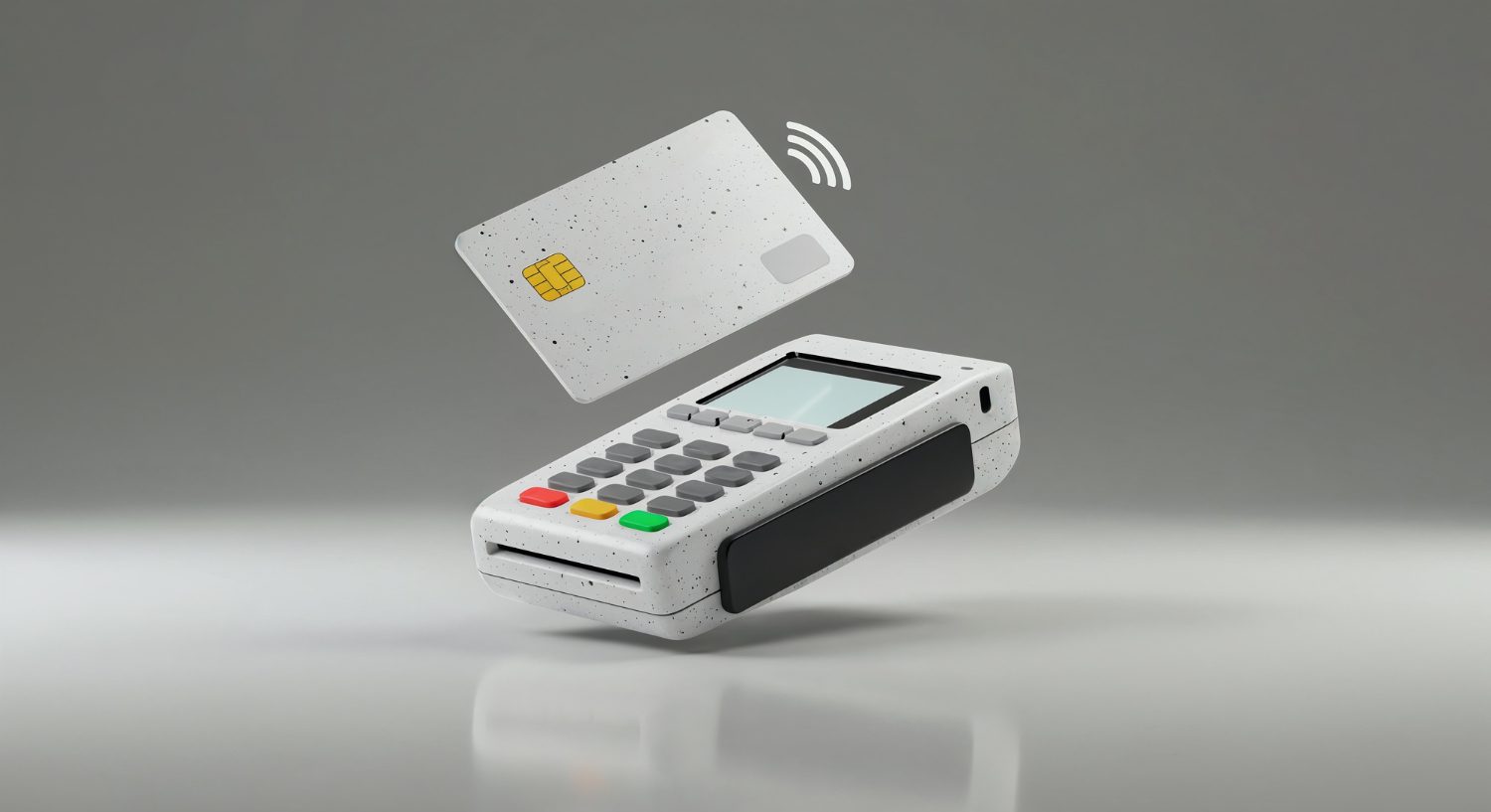
DCC is sometimes shown as “Pay in GBP?” or “Pay in your home currency?”. It is a point-of-interaction conversion: the merchant/ATM offers to charge your card in your billing currency instead of the local currency.
Tide describes DCC (also called “cardholder preferred currency”) as a payment processing option that can allow card payments to foreign merchants in GBP (or overseas cash withdrawals billed in GBP), while noting that it can cost extra because of varying exchange rates and additional fees; see Tide’s DCC explanation.
DCC is not the same thing as the conversion that can happen later through the card-processing chain when the transaction is charged in local currency and converted during processing. The defining feature is who performs the conversion: the merchant/ATM conversion route (DCC) versus the downstream processing route.
Why a card terminal offers DCC
1) The merchant or ATM operator has enabled a DCC service
A terminal can only display DCC if it is configured to do so through the merchant’s acquiring setup (or an ATM operator’s setup). That is why DCC appears more often in high-tourist environments (hotels, restaurants, transport hubs) and at certain ATMs.
Mastercard’s published DCC performance guidance describes DCC as a service provided by acquirers and merchants/ATM owners that allows the cardholder to choose whether to complete the cross-border transaction in local currency or billing currency; see the Mastercard Dynamic Currency Conversion Performance Guide (Merchant Version).
That requirement shapes the user experience: the DCC prompt is placed right before the transaction is submitted, because the transaction has to be created and authorised in one chosen currency.
3) There can be commercial incentives to offer it
Some acquirers market DCC to merchants as a way to create additional revenue alongside the convenience of “home-currency totals”; for an example of how DCC is presented commercially, see Elavon’s DCC guide.
This does not mean every merchant actively “pushes” DCC, but it does explain why the option exists in many terminal setups: it can be a packaged service feature rather than an ad-hoc decision by staff.
What DCC changes (the mechanics)
Who sets the exchange rate
The core change is that DCC moves conversion to the merchant/ATM. Mastercard’s own converter page explains that if a transaction is converted by the merchant or ATM operator, Mastercard currency conversion rates will not apply, and notes this usually occurs when you select to pay in your card’s currency rather than the merchant/ATM currency; see the Mastercard currency exchange rate converter page.
So, DCC is effectively a “conversion ownership switch” at the moment of payment.
What you see on screen and on the receipt
With DCC, the terminal typically shows both the local currency amount and the billing currency amount, alongside a conversion rate or rate disclosure before confirmation. The practical impact is that the receipt becomes a key evidence trail for how the billed amount was created, particularly for expense reviews or disputes.
How costs show up (embedded vs explicit)
Visa’s consumer explanation frames DCC as an option to pay in your home currency which includes an exchange rate and additional fees; see Visa’s dynamic currency conversion explanation.
In real-world terms, that often means the “extra cost” of DCC may appear as:
a less favourable conversion rate embedded in the billing-currency amount shown at checkout, and/or
additional fees associated with the conversion route.
Why policy discussions focus on transparency
Regulation (EU) 2019/518 explicitly discusses problems with transparency and comparability where alternative currency conversion options are offered at ATMs or points of sale, and sets out measures intended to improve the information available to payers; see Regulation (EU) 2019/518 on EUR-Lex.
In the UK, the regulator has also published examples of good and poor practice in communicating international payment pricing and mark-ups, which is relevant context for how conversion-related costs are explained; see the FCA’s international payment pricing transparency publication.
Summary Table
| Scenario | Outcome | Practical impact |
|---|---|---|
| Terminal offers “Pay in GBP?” for a EUR purchase | DCC choice happens before authorisation | The merchant-side conversion route can set the rate rather than downstream processing |
| ATM offers to bill withdrawal in GBP | DCC offer appears on the ATM screen | The GBP amount is determined at the ATM conversion step and may include extra costs |
| Online checkout offers to pay in GBP | Merchant checkout can apply conversion | The conversion margin can be embedded in the displayed GBP total |
| Refund follows a DCC purchase | Refund is tied to the original transaction setup | Reconciliation can rely heavily on the original receipt details |
| Multiple staff travelling | Some accept DCC, some do not | Cost comparisons across receipts can become inconsistent, complicating audit trails |
Scenario Table
| Scenario-level | Process-level | Outcome-level |
|---|---|---|
| Card-present purchase abroad | Terminal asks for currency selection immediately before authorisation | Transaction completes in local currency or billing currency depending on selection |
| Merchant/ATM performs conversion | DCC route converts at point of interaction | Scheme conversion may not apply because conversion happened before processing |
| ATM cash withdrawal abroad | ATM displays a conversion offer and terms | Total cost can vary materially depending on conversion route chosen |
| Refund or reversal | Linked to the original transaction record | The evidence trail often depends on the original DCC disclosure and receipt |
| Finance reconciliation | Statement lines are matched to receipts | DCC introduces an extra variable: conversion route and embedded margin |
Tide Business Bank Account
DCC is a terminal-level conversion mechanism that can show up when business debit cards are used abroad or at certain online checkouts. It is separate from Tide’s plan fees and separate from bank transfer pricing mechanics.
For broader Tide context beyond DCC mechanics, see our hub page on the Tide business bank account.
DCC is also frequently confused with “international payments” topics that use different rails entirely. If the underlying question is actually about transfer routes and fees (not card terminals), these guides cover those separate mechanisms:
Frequently Asked Questions
DCC means the merchant is offering to convert the price at checkout into your card’s billing currency (for example GBP) and charge you in that billing currency, rather than charging you in the local currency.
Mechanically, that choice changes the conversion route: the conversion is performed by the merchant/ATM conversion service as part of the transaction setup, rather than being left to the downstream processing chain.
The prompt appears at that point because the transaction must be submitted for authorisation in a single chosen currency. DCC is therefore presented at the point where the terminal is finalising the transaction details.
That placement can make DCC feel like a routine confirmation screen, even though it is a pricing decision about which conversion route will be used.
Not necessarily. Mastercard states that if the transaction is converted by the merchant or ATM operator, Mastercard currency conversion rates will not apply, and notes that this usually occurs when the cardholder selects to pay in the card’s currency rather than the merchant/ATM currency; see the Mastercard currency exchange rate converter page.
So, selecting DCC commonly means the conversion is handled outside the scheme conversion route, and the “rate you pay” is embedded in the merchant/ATM conversion offer.
DCC is designed to present the local amount and the billing-currency amount alongside a conversion rate or disclosure before confirmation, so that the payer can make an informed selection.
Mastercard’s published DCC guidance describes the nature of the service and the requirement for a cardholder choice; see the Mastercard DCC Performance Guide (Merchant Version).
In practice, receipts matter because they become the durable record of what was agreed at checkout. If the displayed information is not captured on a receipt (or is hard to read), it can be difficult to reconstruct the conversion basis later.
Visa explains that when a merchant offers DCC, the cardholder may be given the option to pay in their home currency, which includes an exchange rate and additional fees; see Visa’s DCC explanation.
That means two identical local-currency purchases can produce different GBP totals depending on whether the conversion was done at checkout (DCC) or later via the processing route. The difference can be driven by the conversion rate offered and any conversion-related fees embedded in that route.
DCC is most visible on card terminals and ATMs, but similar “bill in your currency” offers can appear in online checkout flows. The underlying principle is the same: the merchant is offering to convert the price into the payer’s currency before the transaction is processed.
Where online checkouts present a currency toggle, the total in the billing currency can include conversion margin inside the merchant’s pricing logic, making the conversion route part of the “price you accept” on-screen.
Refunds and reversals are linked to the original purchase record and its currency setup. Where a transaction was billed in the billing currency because DCC was selected, the refund is typically processed against that billed-currency transaction record.
Operationally, this is why DCC receipts become important during reconciliation: if the refund amount appears “off” compared with a remembered local price, the original conversion offer (rate/amounts) helps explain the billed currency values.
DCC is a configured service, so it shows up where merchants or ATM operators have enabled it – often in locations with a high proportion of foreign cardholders.
That prevalence is therefore more about terminal configuration and customer mix than about the underlying goods or services being purchased.
Some providers also frame DCC as a merchant feature with revenue implications, which can influence adoption; see Elavon’s DCC guide for an example of how DCC can be marketed to merchants.
DCC introduces an extra variable: two employees can pay the same local-currency price but accept different conversion routes, producing different GBP totals. That reduces comparability across travel spend and can make variance analysis noisier.
It also shifts the evidence burden towards receipts. In local-currency transactions, conversion happens later and is explained by processing rates and fees; in DCC transactions, the conversion offer is part of the checkout record, so retaining the receipt and its disclosure becomes more important for audit trails.
DCC is a card checkout conversion mechanism at a terminal/ATM (or merchant checkout). International transfers use different rails, different fee components, and different routing and intermediary-bank effects.
If the underlying question is actually about transfer mechanisms rather than terminals, the relevant comparison topics are covered in Tide international transfers: SWIFT vs SEPA vs ACH explained and Tide international transfer fees: provider vs intermediary bank fees, which deal with transfer-chain pricing rather than point-of-sale conversion.
DCC is best modelled as a conversion ownership switch at the point of interaction. A terminal prompt is not merely a convenience feature; it is the mechanism that determines whether conversion happens at checkout (merchant/ATM conversion route) or later (processing conversion route).
Once that switch occurs, the “rate” and “total cost” cease to be purely a scheme-processing outcome and become part of the merchant/ATM’s conversion offer.
This is why DCC tends to create operational friction in business contexts: it changes which documents explain the total (often the receipt), and it reduces comparability across transactions because different merchants/ATMs can present different conversion terms.
The practical impact is less about FX theory and more about traceability: understanding which route created the billed currency amount.
Related Content